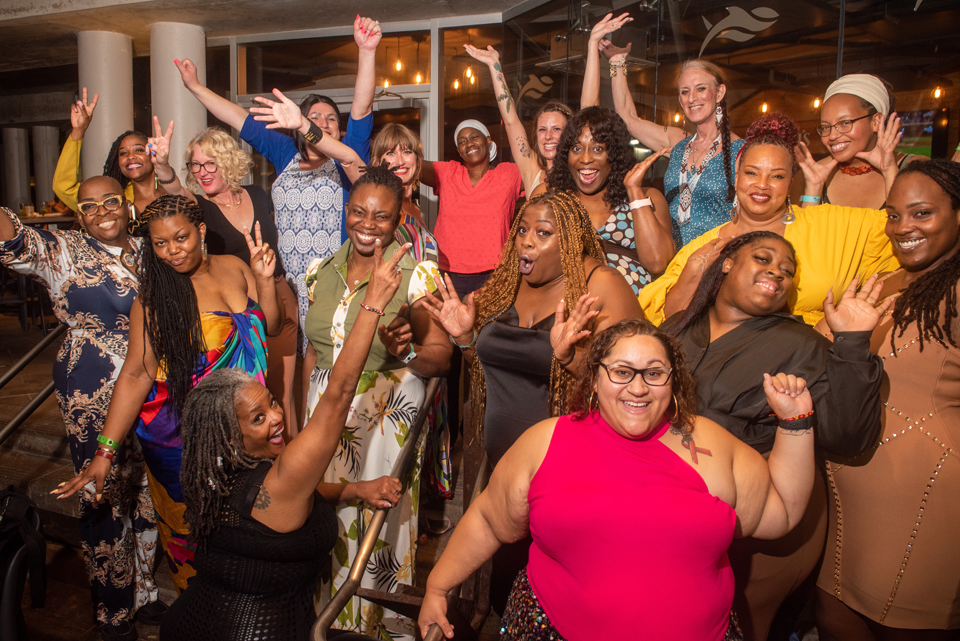
We asked a few participants from the 2011 WRI meeting to share their thoughts about their experiences at the meeting.
Erika Aaron, MSN, CRNP
 What were the highlights for you during WRI?
Networking with leaders in the field of Women and HIV in a setting where we were able to have didactic presentations followed by in-depth conversations was a remarkable opportunity for me. Because there was ample time allotted for conversations and exchange of ideas, we were able to explore issues in depth. This allowed us to brainstorm suggestions and resolutions to relevant issues that affect the care of women who are HIV+.
How will you incorporate WRI into your work?
As a result of the thoughtful time allotted to in-depth exploration of issues that affect the care of women who are HIV+, I was able to think about my practice and how I can improve upon it. I know that I will not hold back hugs for my patients, that the touch and embrace is so important in making a meaningful and trusting relationship (Thank you WORLD for this).
The innovative ways of presenting material was very creative and will help me with educational presentations I give to consumers and health professionals. The breakout sessions, the thoughtful questions posed to the group, the creative interludes between breaks will be used well by myself and others with whom I will share this experience.
I had a great opportunity to think through the priorities that I would like to focus on in the care I give by patients and initiatives I am working on to better the quality of life for women who are HIV+. This was an unusual opportunity for me in that my work life is full to the brim and gives me little time to spend on being quiet and thoughtful. One such initiative I have decided to concentrate on is PrEP for serodiscordant couples. I believe that we are on the brink of a revolutionary period in the prevention of this disease. The anticipated findings from the trials that are ongoing will be similar to 076 and its effects on dramatically decreasing perinatal HIV disease. Despite this week's disappointing results from the FemPrEP study, I believe we will have promising outcomes in the VOICES trial that was presented so eloquently by Sharon Hillier.
What made WRI a valuable meeting for you?
Time to think, time to reflect, time to network with fabulous people who are interested in the same things that I am. I am so thankful to Dawn and The Well Project for making this possible for me.
Julie Barroso, PhD, ANP, APRN, BC, FAAN
 There are many things I love about going to this think tank. Perhaps most importantly, I would like to think that the work I do with this group makes a difference. Many of the people in that group are those that can truly effect policy change. But it is also wonderful to have 4 days where I can THINK…not just race from one meeting to the next, or worry about my students, or worry about my own research career, but to think, to be fully engaged, to be present in the moment, to devote everything that I know to helping us craft solutions to the many problems faced by positive women. I took a deep breath as we pulled into the hotel grounds, and let go of everything racing in my head.
The WRI was originally conceived with a focus on more, better, faster research into antiretroviral medications for women. But over the years, we have shifted a bit to focusing on the many additional factors that complicate women's lives when they are poor and of minority status. If women do not have gainful employment, health insurance, day care so they can work, transportation to get to work, food and the other necessities of life, we can develop all of the medications we want but we are not really changing their lives. The positive women who attend this meeting bring us back to this point constantly: that in lives that are marked by poverty, discrimination, stigma, and violence, HIV may be just one more thing they have to deal with.
Rebecca Denison
 What were the highlights for you during WRI?
As a listener: I love the opportunity to see and think about HIV/AIDS through other lenses, and to see the synergy that happens as each person brings their expertise and experience into the conversation.
As a person who gets to share as well as listen, and as an HIV+ woman: It's wonderful to have an opportunity to bring my "real world" experiences, and those of my peers, into a high level meeting where people who make important decisions about research and policy can hear them. I love it when a positive woman shares something that is well known or "obvious" to HIV+ women, and you see delegates in the room having an "aha moment" they would not have had otherwise.
How will you incorporate WRI into your work?
- I am sold on the value of creating settings where the synergy of interdisciplinary thinking can flourish.
- The feedback I got on my film about an HIV doctor and the 10 patients who memorialized her was very valuable, and I am working to make it better because of the feedback I got.
- What made WRI a valuable meeting for you?
- I don't have the time to attend a lot of meetings. I appreciate that WRI always provides a great mix of information and cutting edge updates, networking, support, R&R. I feel like I work like a dog and like I've been on a retreat. Both are true.
How was WRI different than other HIV meetings you've attended in the past?
- SYNERGY. SYNERGY. SYNERGY. No one does it like WRI
Other thoughts...
I hope we can diversify the attendees, and include more positive women, to make our synergy even better. So often what baffles one group of people is painfully obvious to another. There's a lot of untapped wisdom out there among HIV+ women of color that I am un- or ill-equipped to share.
Thanks! I love WRI.
Carrie Elizabeth Foote, PhD
 Attending WRI has provided me with a renewed sense of commitment to research and advocacy on behalf of HIV infected and affected women, especially as it pertains to reproductive experiences and rights. For the past few years, I have faced some very difficult personal and professional challenges. As a result, I nearly lost all of my interest in work, and consequently, my HIV-related research and community efforts diminished. WRI reminded me of my true passion and interest, which is in dedicating my work to improving the lives of people living with HIV, especially women. I am so thankful for having the opportunity to participate in such an important meeting with so many dedicated and caring people.
The WRI conference, for me, was much more than a place to network, share information, and engage in advocacy around women and HIV. It was truly a charismatic experience in that I felt part of a community of people who come together like a puzzle to make a complete picture. Each of us has a different focus but in the end, it all ties into the larger picture of improving the lives of women infected and affected by HIV. Bringing us all together reminded me of my 'calling' in life to pursue research and advocacy on behalf of the afflicted. It did this by reminding me that my work and efforts truly do matter and can make a positive difference in the lives of both men and women with HIV. I left WRI with a renewed sense of energy and interest in my work that I have not felt in a long time. I suspect I am not alone in having this experience.
On a personal note, it was also really important for me to get to know Dawn and Rebecca better and remind myself that the Well Project exist and is a very active and growing organization. As I have aged with HIV and embarked on a professional career, I found myself losing a support group of women living with HIV that I had in my earlier years living with HIV. There are relatively few support groups or other ways to network with positive women in Indiana, and nearly impossible to do so with other women who are holding demanding jobs while raising a family in the context of HIV. Getting to know Dawn and Rebecca better reminded me that I am not alone as I, and my family, age and live life with HIV. Prior to WRI, I am not sure if I could have named any HIV positive women who I truly felt were inspirations for me. But getting to know both Dawn and Rebecca better during WRI (and hearing them speak and share publicly for the first time….that is my first time in hearing them, not theirs in speaking) has changed that, as I left WRI being inspired by both of them. They are truly amazing women who had a profound positive effect on me in terms of not feeling alone and inspiring me to embrace the work I do. I am so glad I had the opportunity to hear them both share experiences and to see their dedication to women and HIV.
Thank you for inviting me to participate!
Caroline Mitchell, MD, MPH
 What were the highlights for you during WRI?
Hearing about the diverse range of work that the other members are doing is inspiring. It generates new ideas, potential collaborations, and a sense of higher purpose.
Sharon Hillier's talk about PrEP was wonderful, as much for her attitude about advocacy and her commitment to providing women choices as for the science.
Richard's talk about plans for the globalization of the TWP website was also incredible - the idea of helping women develop content in their own language and cultural context is incredibly powerful and progressive.
How will you incorporate WRI into your work?
- As an OB/Gyn I assume that women's health is important, and discussions at the conference reminded me that this isn't necessarily a view held by all. I realized that advocacy and being outspoken are key pieces of my job. Based on stories of inadequate treatment for women with HIV, I have put a lecture on women with HIV into the resident education series at my University.
- My research focuses on innate immunologic mechanisms of vaginal protection from infections, including HIV. This conference reminds me about the larger context (ie. behavioral, social, political) in which any results will be placed, and offers ideas about what sort of outcome I should be aiming for: ie. what kind of product or treatment for prevention will be useful, acceptable and desirable for women.
What made WRI a valuable meeting for you?
- The group, the insipiration, the space to think and hearing so many diverse ideas.
- Being reminded that access to treatment and adequate health care are not a given, not even for women who know how to navigate the system. It can sometimes be easy to forget about the advocacy part of my role as a physician, and at this meeting I reconnected with that piece.
How was WRI different than other HIV meetings you’ve attended in the past?
- WRI is far more multidisciplinary, and is not just PhDs or MDs, or basic science and epidemiologic researchers as the other meetings I attend are. I really appreciate the presence of people doing sociologic and ethnographic research, community advocates, providers, industry - I think the diversity of the group leads to incredible creativity.
Tonia Poteat, PA-C, MPH
 What were the highlights for you during WRI?
I loved having the opportunity to talk in a small group about a cure for HIV. A cure! Something I never even imagined could be a real topic for discussion as recently as last year. But, there we were, an amazing mix of bench scientists, social scientists, clinicians, and community advocates, all talking about the potential implications of an HIV cure, in our lifetimes.
How will you incorporate WRI into your work?
I feed on the energy and passion of that committed group of people, dedicated to doing research in all disciplines that is relevant to the well-being of women with HIV. I bring some of that passion back with me to my work both in the clinic, as a clinical trainer, and as a budding researcher.
What made WRI a valuable meeting for you?
It was a perfect combination of networking, education, relaxation, and thought-generating. I got to re-connect with people I've known for years, as well as meet new people who will serve as mentors for me as I shift from clinician to researcher. I learned that other providers also hug their patients and take pride in doing so. I read a research article on HIV transmission among women and within 10 minutes was able to talk to three of the nation's leading researchers about the implications of the findings. I got to begin co-mentoring relationships with other budding researchers both while taking a long run through the woods on a gorgeous day and while sipping white wine over an evening fire.