What's on This Page?
Mission
The Well Project is a non-profit organization whose mission is to change the course of the HIV/AIDS pandemic through a unique and comprehensive focus on women and girls across the gender spectrum.
Vision
The Well Project envisions a world in which women living with or vulnerable to HIV have the information, support, and tools they need to advocate for their health and well-being, and live free from stigma.
Values
The work of The Well Project is grounded in these core values:
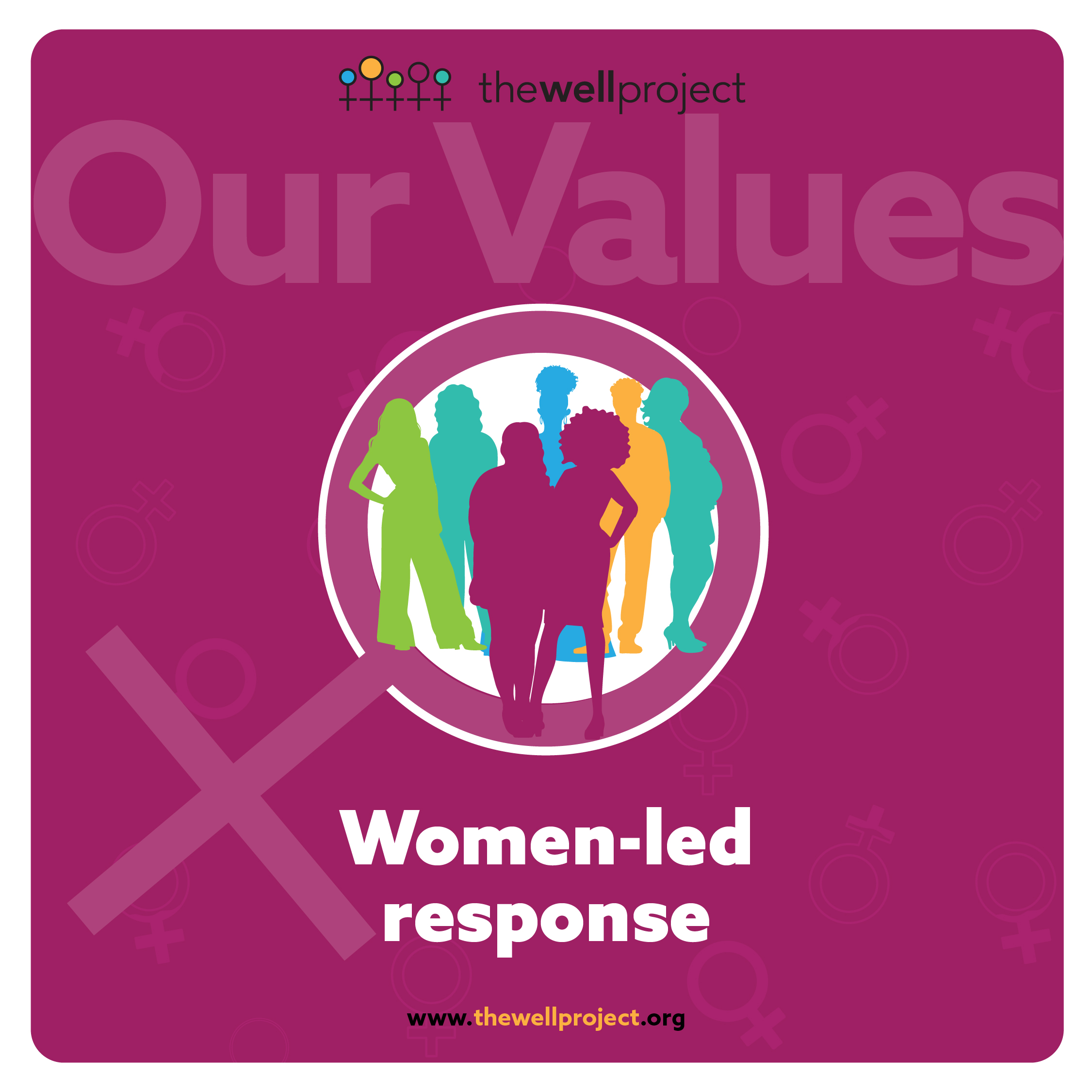
Women-led response
- Our unwavering focus on women across the gender spectrum is the essence of all that we do
- We model practices we want to see in our communities, our movements, and the world
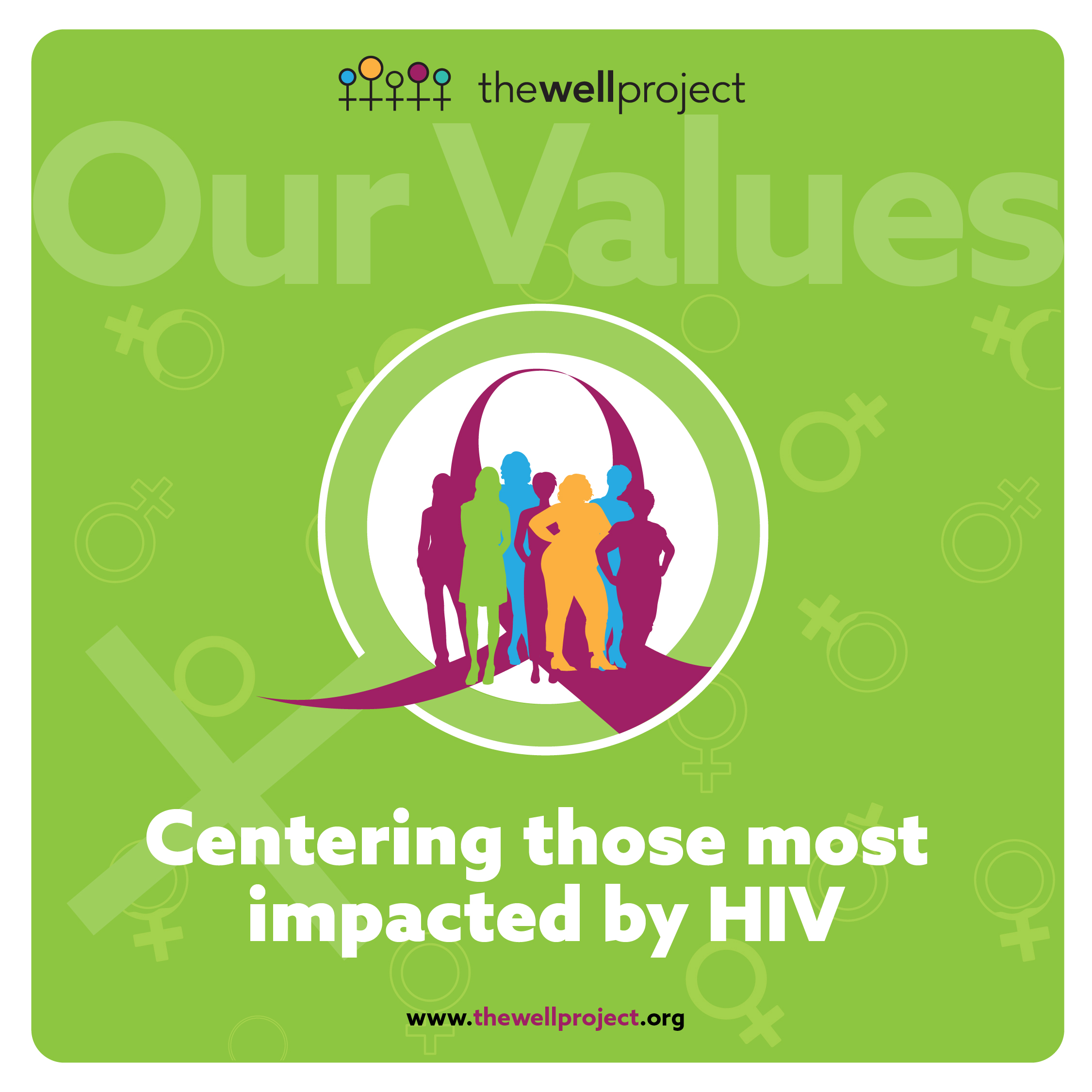
Centering those most impacted by HIV
- We believe those most affected by change must guide change-making
- Our work centers Black women, Latinas, and other women of color living with HIV across the gender spectrum while creating spaces and opportunities for all
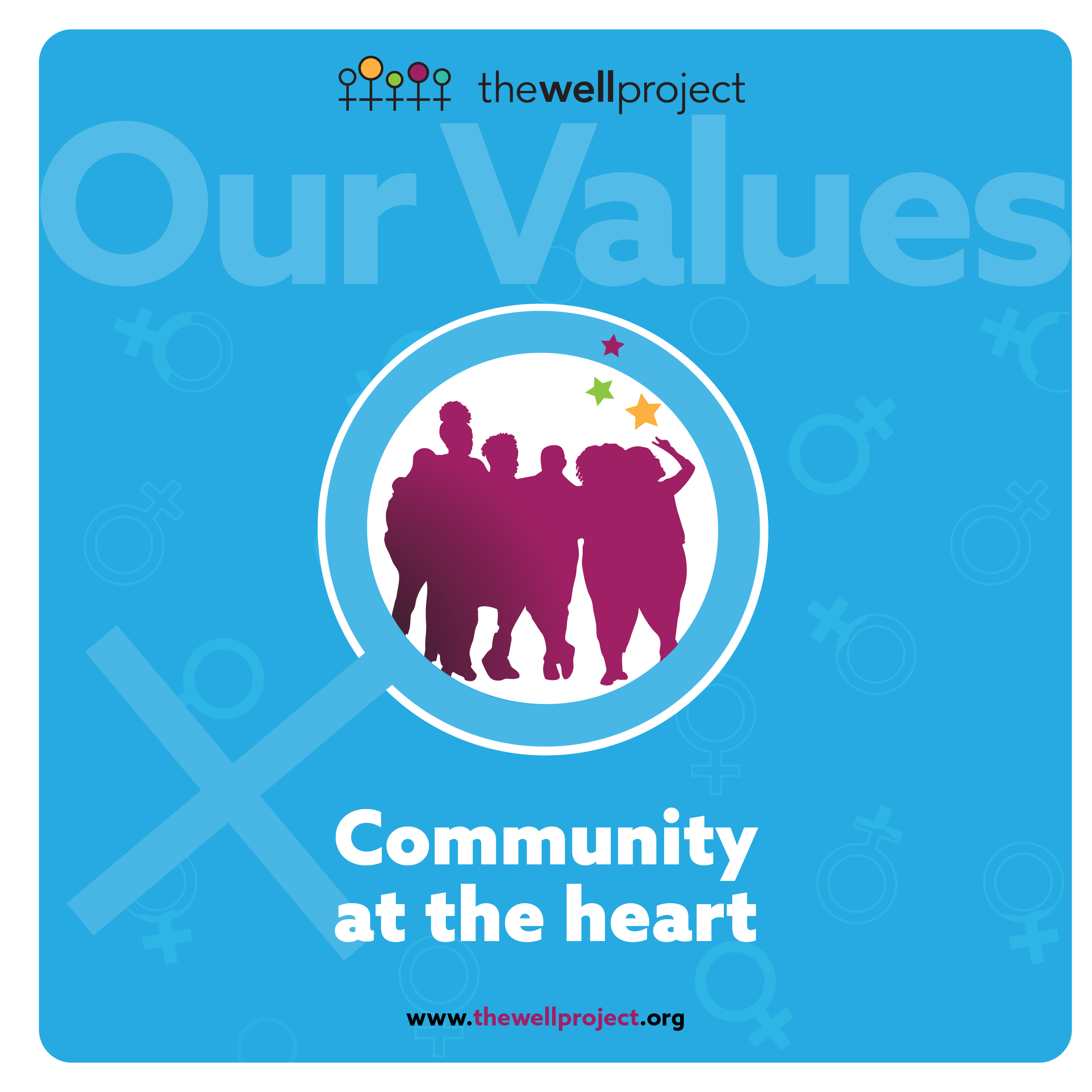
Community at the heart
- We foster connections among women living with and affected by HIV, rooted in compassion and care for one another
- We elevate self-care and advocacy as integral parts of caring for community
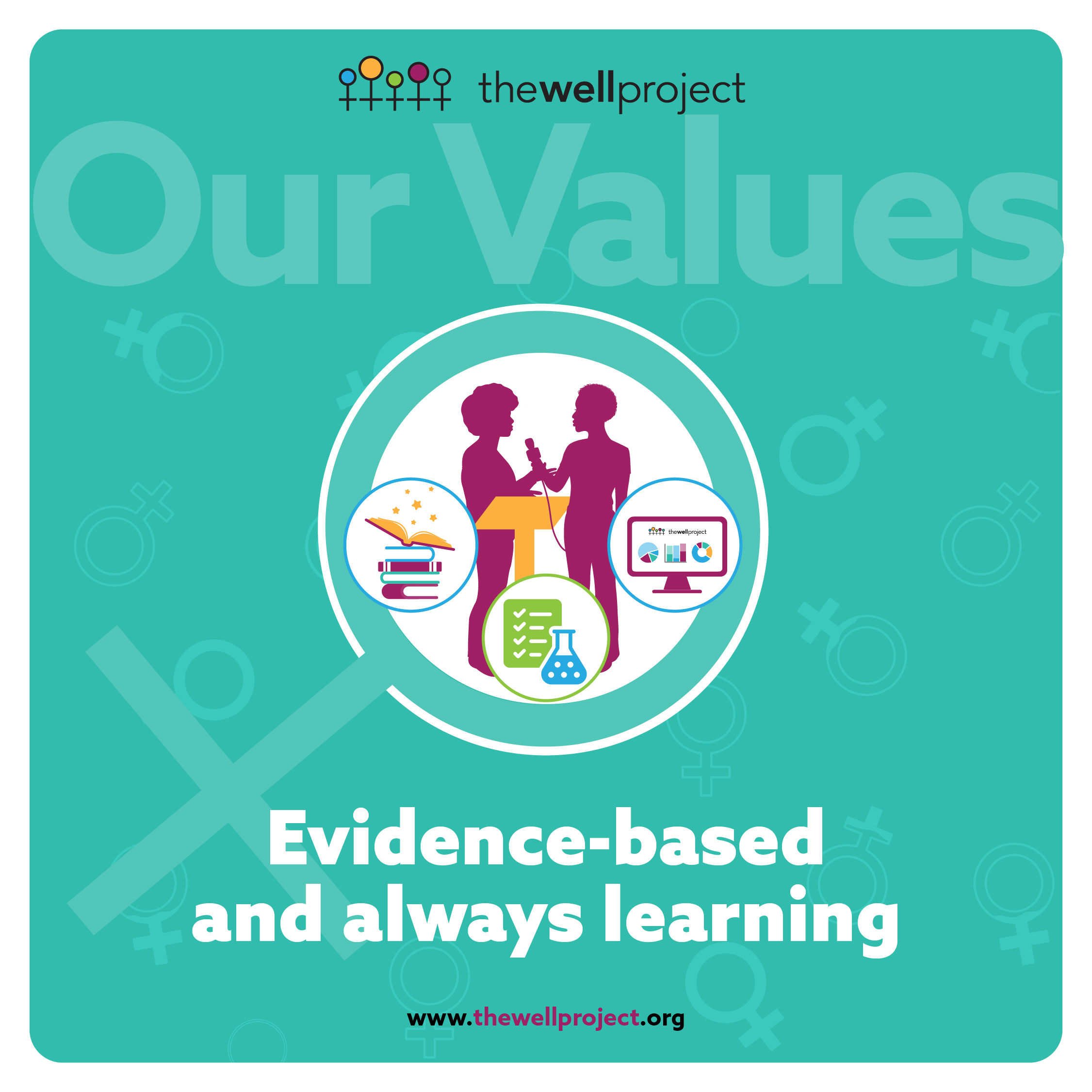
Evidence-based and always learning
- We ground our work in research and community-based evidence
- Our language and approach evolve as new insights emerge
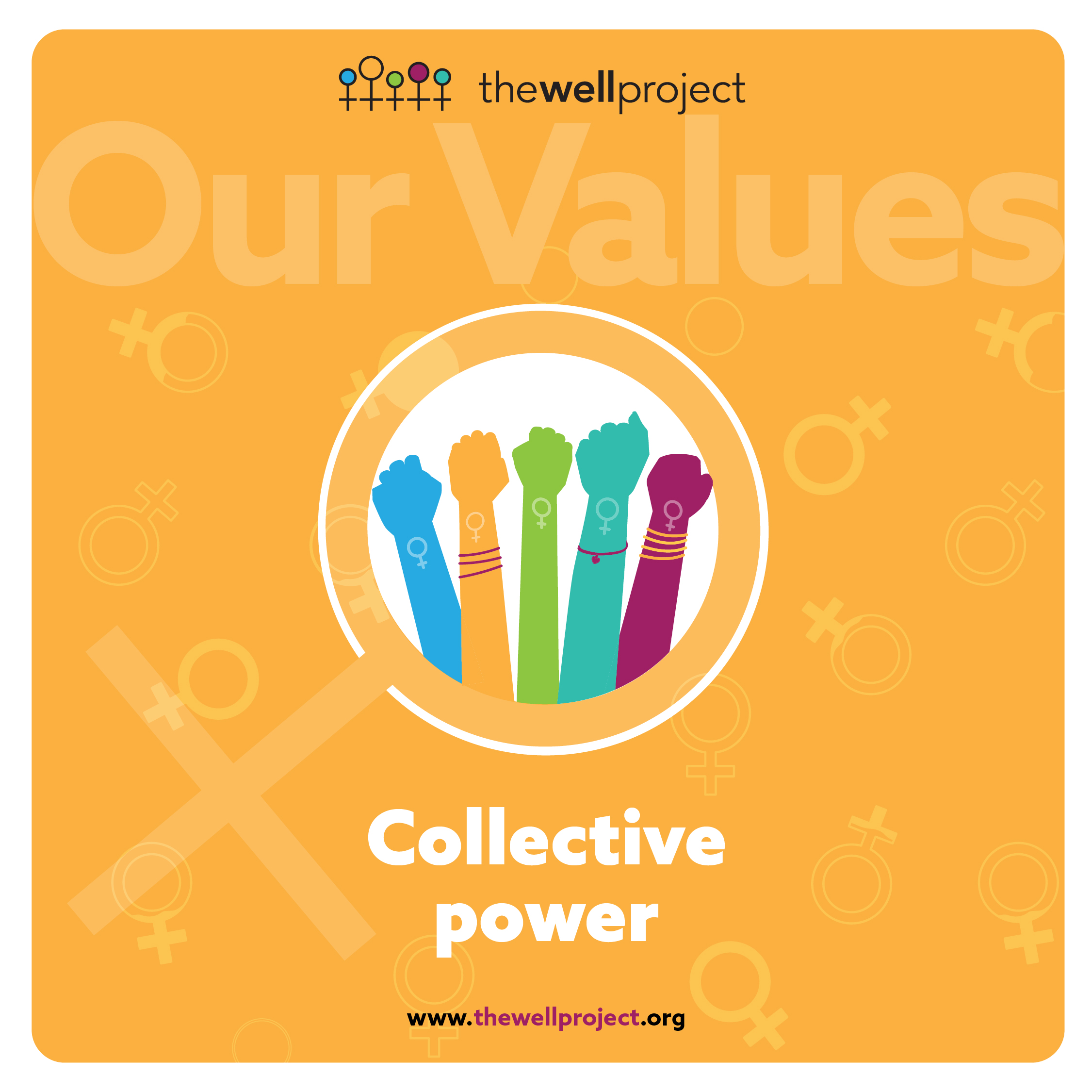
Collective power
- We support and stand with women in claiming agency and building power
- We take action to ensure our communities are never an afterthought
What We Do
Founded in 2002, The Well Project has become a recognized leader in the fight against HIV by revolutionizing the availability and accessibility of much-needed resources designed specifically for women living with and vulnerable to HIV; and by prioritizing the advancement of women across the gender spectrum in all aspects of HIV prevention, treatment, and cure research and policy. The Well Project provides tools for women to build a foundation to not only survive, but also thrive with HIV. Reaching more than four million users annually through our web portal and social media channels, The Well Project leverages technology to improve health outcomes and quality of life for women living with HIV.
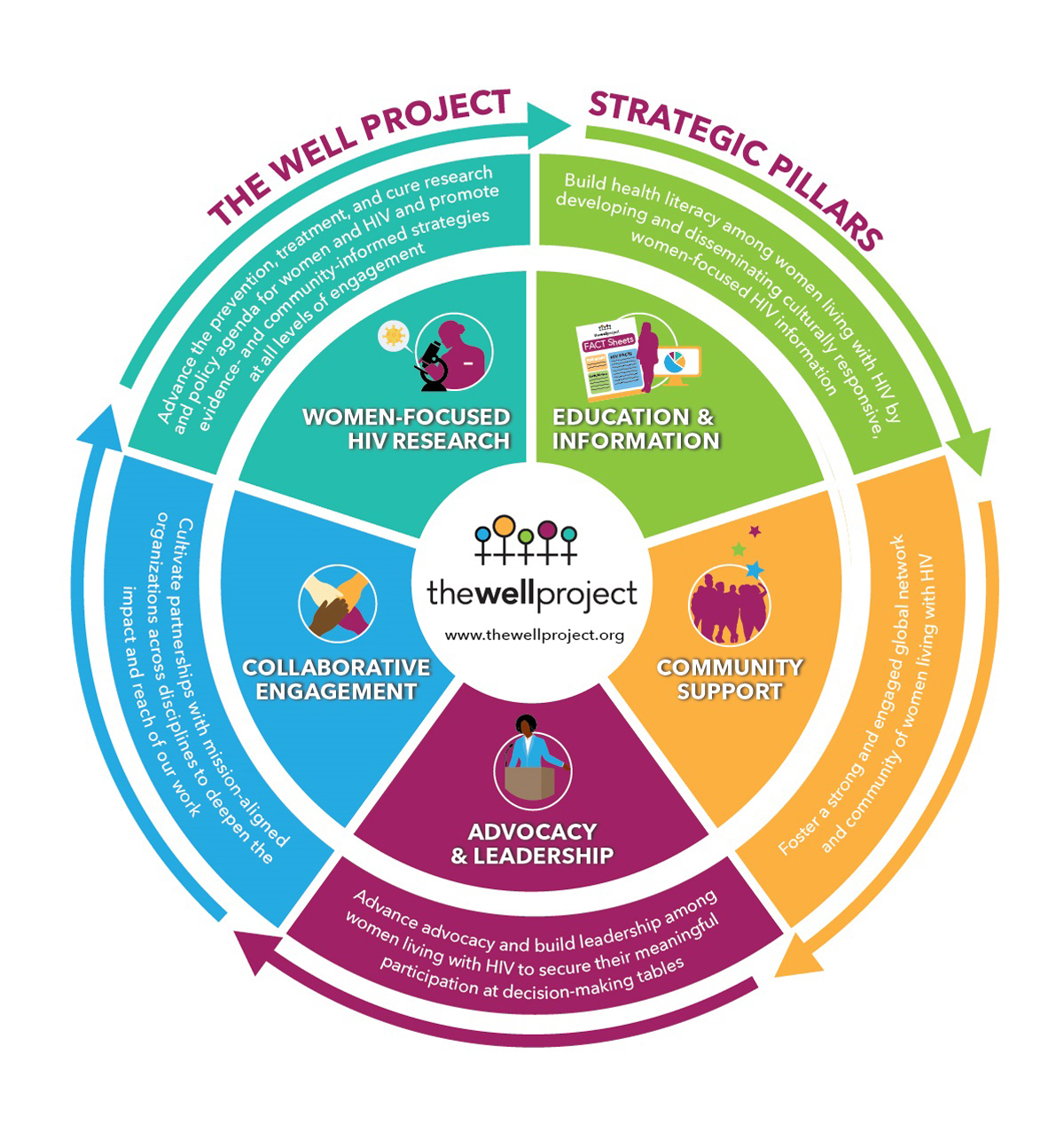
The Well Project's programming is supported by the following five strategic pillars:
- Education and Information
- Build health literacy among women living with HIV by developing and disseminating culturally responsive, women-focused HIV information
- Community Support
- Foster a strong and engaged global network and community of women living with HIV
- Advocacy and Leadership
- Advance advocacy and build leadership among women living with HIV to secure their meaningful participation at decision-making tables
- Collaborative Engagement
- Cultivate partnerships with mission-aligned organizations across disciplines to deepen the impact and reach of our work
- Women-Focused Research
- Advance the prevention, treatment, and cure research and policy agenda for women and HIV and promote evidence- and community-informed strategies at all levels of engagement
Why Women?
Women and girls represent more than half of all people living with HIV across the globe -- that's more than 18 million women and girls living with HIV. Among transgender women, the HIV epidemic is particularly severe. It is estimated that the global proportion of transgender women living with HIV is 66 times higher than in the general adult population.
In the US, women account for approximately one in four people living with HIV and one in five new HIV acquisitions. Black and Latina women, though they represent less than 30 percent of the general population, bear an extraordinary proportion of the burden of HIV – about eight out of 10 women living with HIV in the US are women of color.
Women living with HIV also face numerous structural and societal barriers to accessing healthcare. For many women, an HIV diagnosis is only one challenge on a long list: gender-based violence and trauma, stigma and discrimination, racism, lack of female-controlled prevention methods, limited participation in clinical trials, and other gender-based inequalities (including poverty, housing, serving as primary caregivers, laws that disproportionately affect women). These inequalities not only increase women's vulnerability to HIV, but also negatively impact the health of women living with HIV. Women tend to be diagnosed with HIV later in their disease than men and fewer women than men are getting HIV treatment. Despite these shocking facts and statistics, women living with and vulnerable to HIV have been underserved and underprioritized in HIV programming, policy, and research throughout the epidemic's four decades.
We invite you to join us as we work to improve the landscape for women living with and vulnerable to HIV. Together, we can change the course of the HIV epidemic...one woman at a time.