By Bridgette Picou, LVN, ACLPN
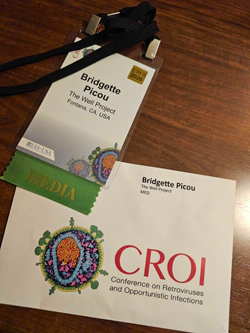
There is no doubt that research and science are an integral part of HIV. From very early work trying to figure out what the virus was, to the International AIDS Meeting where scientists first gathered to share early findings and exchange ideas – which evolved into what is now CROI (or the Conference on Retroviruses and Opportunistic Infections) – conferences have been the place where people gather to discuss breakthroughs, commiserate over failures, and figure out next steps. CROI is not a conference that has a theme attached to it, but as I was trying to title my article, "The Living Theme" came into my head because, as I am living with HIV, the virus, medication, and the science behind it all is a running theme in both my personal and professional life.
CROI 2026 was held in Denver, Colorado, and a lot of attendees seem to favor this location as the conference moves around from year to year. CROI is and remains a dedicated science conference. As with last year, in light of the uncertainty of a presidential administration that has made it clear that research and science are not a priority, the overall mood of the conference was a mix of whispered low-level anxiety from some, combined with the usual anticipation of hearing the latest scientific breakthroughs. Attendance was definitely down this year, a tangible consequence of canceled grants, institutions spending more frugally, and federal employees facing limited or denied attendance. Even with these impediments, there were still over 900 posters with an additional 47 poster discussions and 98 oral presentations over the three-day conference period.
The pre-CROI community conference is an important piece of the conference for many community members. Largely because the conference is difficult to access if you are not a researcher, scientist, or clinician in HIV work. The pre-conference is an opportunity for non-providers to hear some of the science that will be presented and ask questions about those findings. Along with my colleague Danielle Campbell, PhD, MPH, I presented data that The Well Project has gathered about the knowledge, desires, and expectations of women living with HIV as it relates to HIV cure at the Community HIV Cure Research Workshop. Other presentations included international research perspectives from Canada, the UK, and Thailand on topics around treatment, PrEP, and harm reduction strategies.
If I were to try to capture overarching themes present, I would say they are a standing reflection of the things always present at HIV conferences – the need for collaboration; progression towards new modalities and a cure; and, in the last two years, how to stand firm against the assaults on science. I would argue, the latter is a critical call-out. The onslaught of cuts, attacks on identity and on DEI have and will have ripple effects not only on both the state of HIV and its prevalence and possible resurgence, but also on the quality of life for those living with HIV.
Truly, life with this virus goes well beyond medications and their frequency of dosing. As an advocate, I appreciate all the science that delves beyond medication. This year, posters and presentations talked about everything from GLP-1's (glucagon-like peptide-1) for weight loss to a look at neurological effects and brain age in HIV. Lenacapavir, often shortened to Len (from a new drug class and mechanism of action for fighting the virus, called a capsid inhibitor), was a big topic of discussion again at CROI this year. The latest data from the PURPOSE 1 and PURPOSE 2 trials showed there were some five breakthrough acquisitions of HIV from people who were using Len. As a twice-yearly injectable option, the long-acting lenacapavir is still considered an effective, safe method of HIV prevention. GLP-1's are proving to have numerous positive effects on people living with HIV, but questions about their cost, accessibility, and therefore, equitability remain.
The opening plenary of CROI is always highly anticipated and well attended. It is where awards are presented, as well as annual talks like the Bernard Fields lecture (named for a renowned virologist and basic science advocate) and the Martin Delaney presentation. This year, both were standout talks that many people were talking about. The Bernard Fields lecture was delivered by Sharon Lewin; her talk "Thirty Years of Persistence, Progress, and Partnerships in HIV Cure Science" centered on the challenges and successes of basic since and cure research while framing the need for inter-disciplinary collaboration that includes community. To honor its namesake, the Martin Delaney lecture is given by a longtime activist. This year's lecturer, Peter Staley of PrEP4All and a veteran of ACTUP New York, delivered a rousing call to action, drawing parallels between the attacks on science and research of today and the challenges of the earliest days of the fight against HIV. His point was that we may need to mobilize in much the same way activists did early on in the epidemic to defend human rights and science.
I find that reminder important in these times. Community – in this case, specifically community members living with HIV – plays a unique role in science and society. In science we are both the source and the end users of research in that our blood and tissues are where the virus lives, and we use the products and medications created from that research. Our lives are under another microscope in society because of stigma and fear.
While oftentimes, community may feel disconnected from what goes on in a laboratory, in truth, there is an invisible line of connection. Staying informed, and moreover, just knowing there is work being done and progress being made is not something we should lose sight of or take lightly. The Conference on Retroviruses and Opportunistic Infections is a thread in that line.