By Jyoti Dhawale
From July 26-31, 2026, 7,500 participants gathered in Rio de Janeiro, Brazil, for the 26th International AIDS Conference (AIDS 2026) – and several members of The Well Project's circle were among them. Read on for perspectives from The Well Project's global ambassador – and scroll down the page for more from on the ground in Rio at the world's largest HIV-related convening.
For someone who has lived with HIV for more than two and half decades, being at the global AIDS 2026 conference is overwhelming. I have spent years talking about HIV. I have spoken about stigma, about women living with HIV, about children living with HIV, about U=U, about living openly with HIV, about travelling to few countries and continents and how HIV is perceived differently. I have even given awareness sessions in communities, classrooms, corporates. And yet, walking into that conference, I felt small for a moment.
There were people from everywhere. Researchers, doctors, activists, community workers, people living with HIV, young people, elderly people. People who had travelled thousands of kilometers, just as I had, to participate. To be a part of something bigger.
I kept thinking: Look how far we have come.
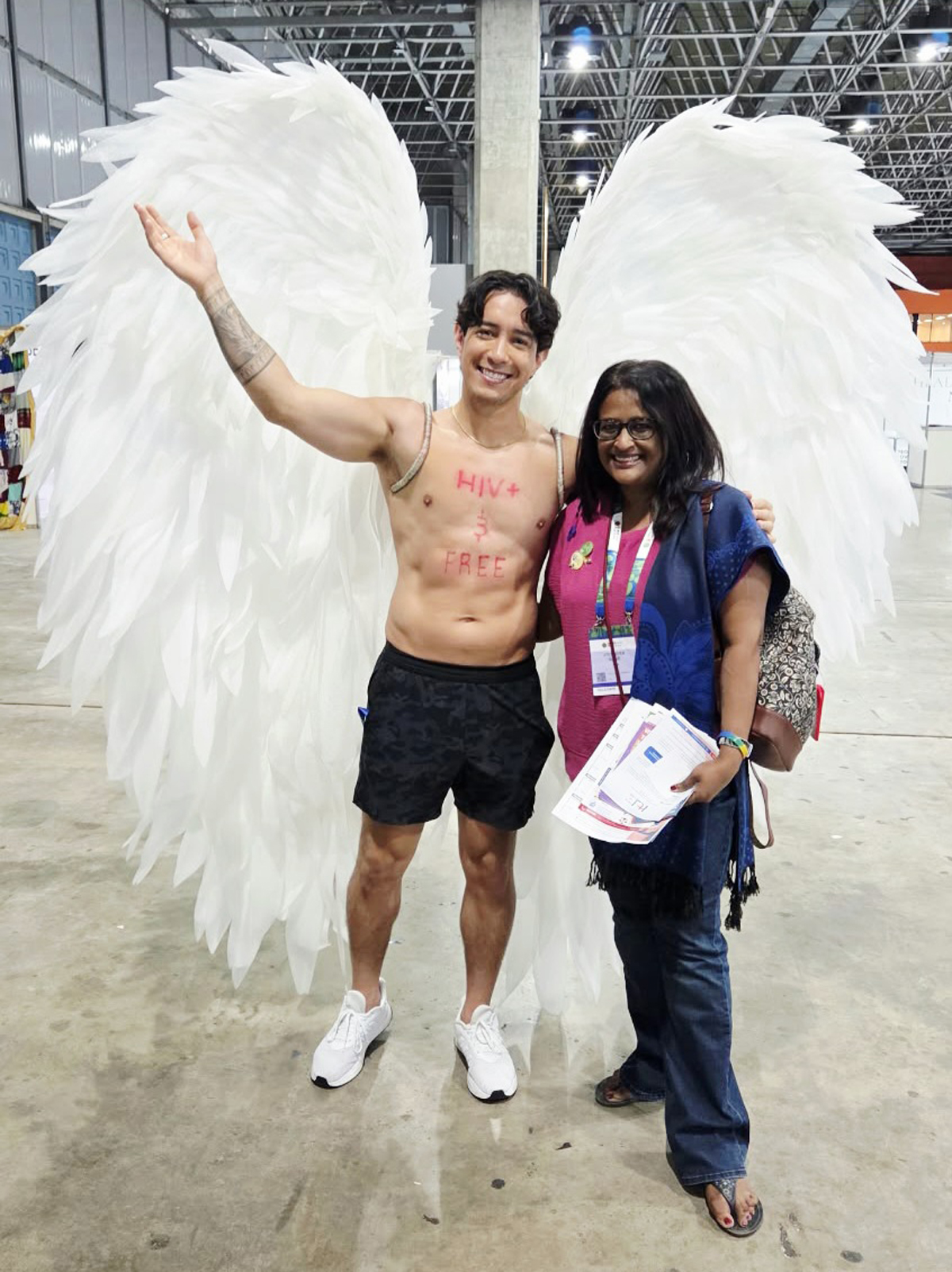
And then came moments that made me think about how far we STILL have to go.
One of them was seeing delegates from Ukraine. They were there. That simple fact broke something open inside of me. Their country is at war; yet they have travelled to Rio to continue talking about HIV, health, and their communities. How do you carry the fear of what is happening at home and still stand on the stage and speak about hope? I don’t know the answer, but seeing them there made me realize that sometimes advocacy is simply about showing up when there are a thousand reasons not to.
And perhaps that is why I started looking at the conference in different light. I began noticing people who were there. And the people who were not. We talk easily about “leaving no one behind.” But I wondered what that really means. Because I am deaf. And I know what it is like to walk into a room and immediately have to think about how I am going to communicate in the din of background noise, how I am going to follow what is happening without a sign language expert or virtual guidance, whether interpretation will be available in the form of live captions, whether accessibility has actually been considered, or whether I am expected to somehow manage (thank heavens for all the accessibility tools and features on my phone that helped navigate the way).
When I looked around this enormous global HIV gathering, I couldn’t stop thinking about other people with disabilities. (I did see three disability booths, but all were run by people with no disability). So where are they? Where are the deaf people living with HIV? Where are the blind people? Where are people with physical, intellectual, and other disabilities? Where are their voices in their conversation about HIV prevention, treatment, sexuality, relationships, and human rights? And why do we still have to ask these questions? I feel slightly saddened thinking about how many people may never even get the chance to walk into a room like this.
Another conversation brought me even closer home: perimenopause and menopause amongst women living with HIV. I had an opportunity to speak about it, courtesy of the organization I have been associated with: The Well Project. Nobody prepared us enough for what happens when a woman living with HIV begins to age. Our bodies change. Hormones change. Our relationships can change. Our sexuality can change. Our confidence can change. And sometimes we are still trying to understand whether what we are feeling is aging, menopause, medication, stress, or simply the accumulation of decades of living through it all.
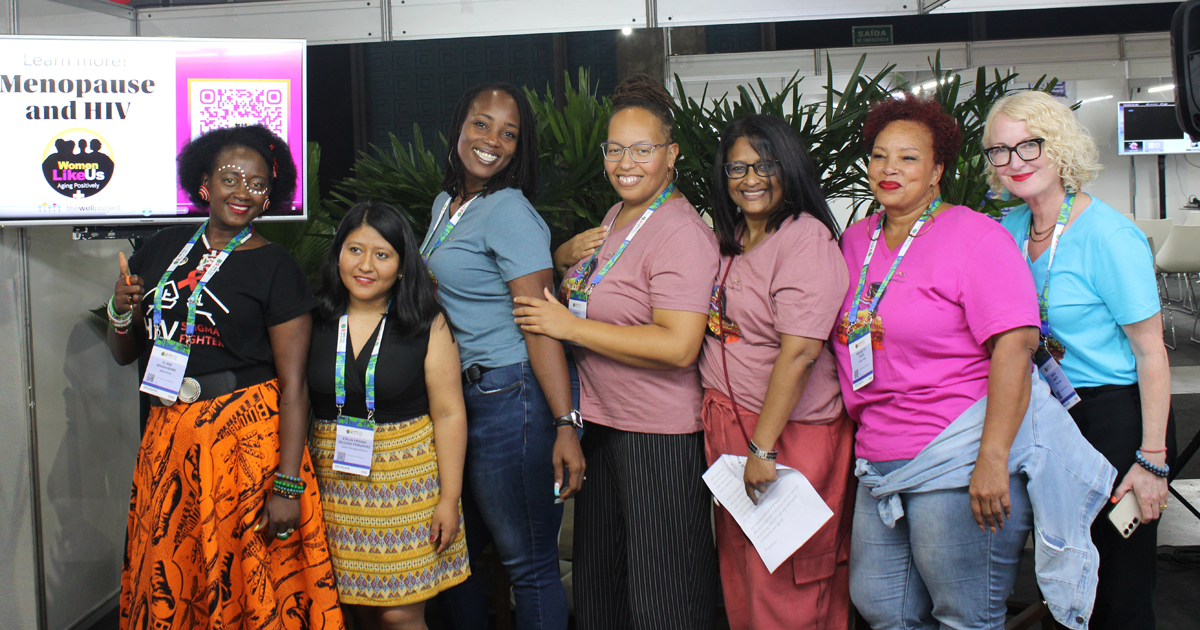
These are not abstract issues for me but a lived experience. And perhaps this is what Rio gave me more than anything else – a reminder that how everyone is going through their day:
Someone forcing to wake up despite immense fatigue to go to work – bills need to be paid.
Someone hiding their HIV status from someone else.
Someone wondering if they will ever find love and marry again.
Someone trying to understand what is happening to their body.
Someone sitting alone in the clinic, afraid to ask questions.
Someone with a disability and tuberculosis wondering whether the health system has remembered that people like them exist.
Someone from the country at war getting on a plane because their community still needs them.
We sometimes talk about the global HIV response as though it is something big, a large gathering, made up of programs, policies, targets, and numbers.
But in Rio, I was reminded that it is actually made up of human beings.
Tired human beings. Brave human beings. Sometimes frightened human beings. People who keep going. People who lose people. People who survive. People who speak. People who are still waiting for someone to listen.
I am still learning, still questioning, still fighting, still hoping. And maybe that is what keeps many of us going. Not the belief that U=U has conquered it all, but the stubborn refusal to accept that the story ends with people who have already been heard.
There are still people waiting outside the room. (Refer to parts two, three, and four of my conference article series)
And we need to open the door and let ALL of them in.
More from The Well Project on the 26th International AIDS Conference (AIDS 2026)
RISE in Rio by HIVstigmafighter on A Girl Like ME
Words Matter: Presenting on Stigmatizing Language in Healthcare at the 2026 International AIDS Conference
The Life I Almost Didn't Live – From India to Brazil (Part 1): A Recap from AIDS 2026
Knowledge and Connection on Prison Health Matters (Part 2): A Recap from AIDS 2026
Being the First – Challenging What Needs to Change (Part 3): A Recap from AIDS 2026
A Powerful Presence in Midst of War – Ukraine (Part 4): A Recap from AIDS 2026