By Olivia G. Ford
The HIV movement has always been intertwined with the struggle for reproductive health, rights, and justice. It's not just us here at The Well Project, standing proudly at that intersection since 2002: Some women veterans of reproductive rights movements of the 1960s and '70s pivoted to fighting the HIV epidemic from its earliest days; and when the term reproductive justice was coined at a convening of Black women activists in 1994, there were HIV advocates, including women living with HIV, in the room where it happened.
In 1981 – the same year the US Centers for Disease Control and Prevention reported the first cases of what would come to be known as HIV/AIDS – a reproductive rights convening known as the Civil Liberties and Public Policy (CLPP) program was launched on the campus of Hampshire College, a small, progressive school in woodsy western Massachusetts. Akin to the early actions in the HIV community, this group came together to build power and craft strategy in response to the ignorance of the Reagan era, specifically around abortion rights and anti-choice backlash after Roe v. Wade made the right to an abortion the law of the land in 1973. CLPP (often pronounced "clip") was clear about nurturing younger reproductive health and rights activists through college student involvement and networks.
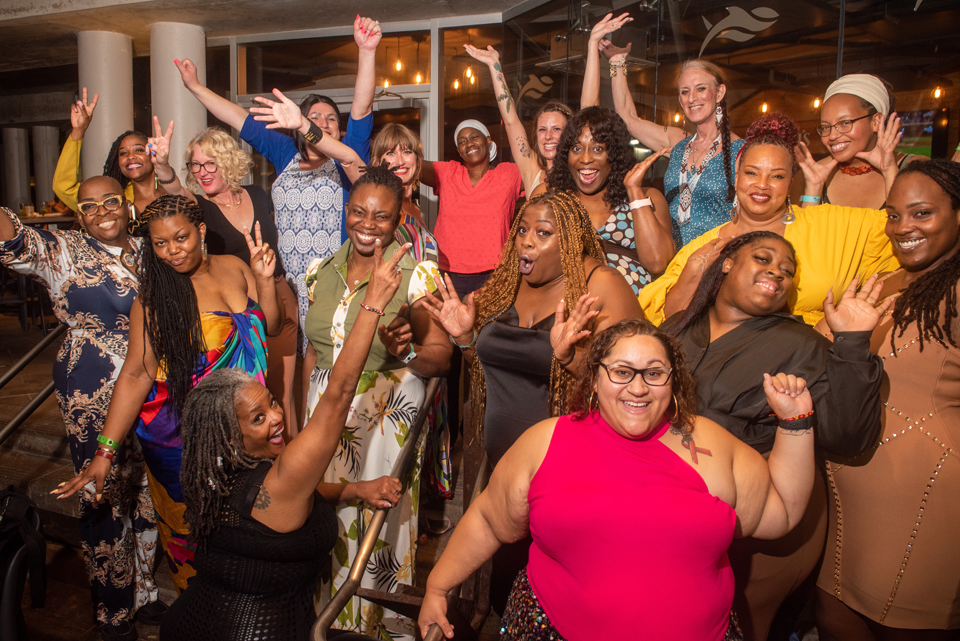
Forty-five years later, and renamed Collective Power for Reproductive Justice, that convening continues and has cultivated generations of movement leaders through the annual gathering, as well as internship and leadership-building programs and other national activities. I was honored to present there in April of this year – the 45th year of the Collective Power conference.
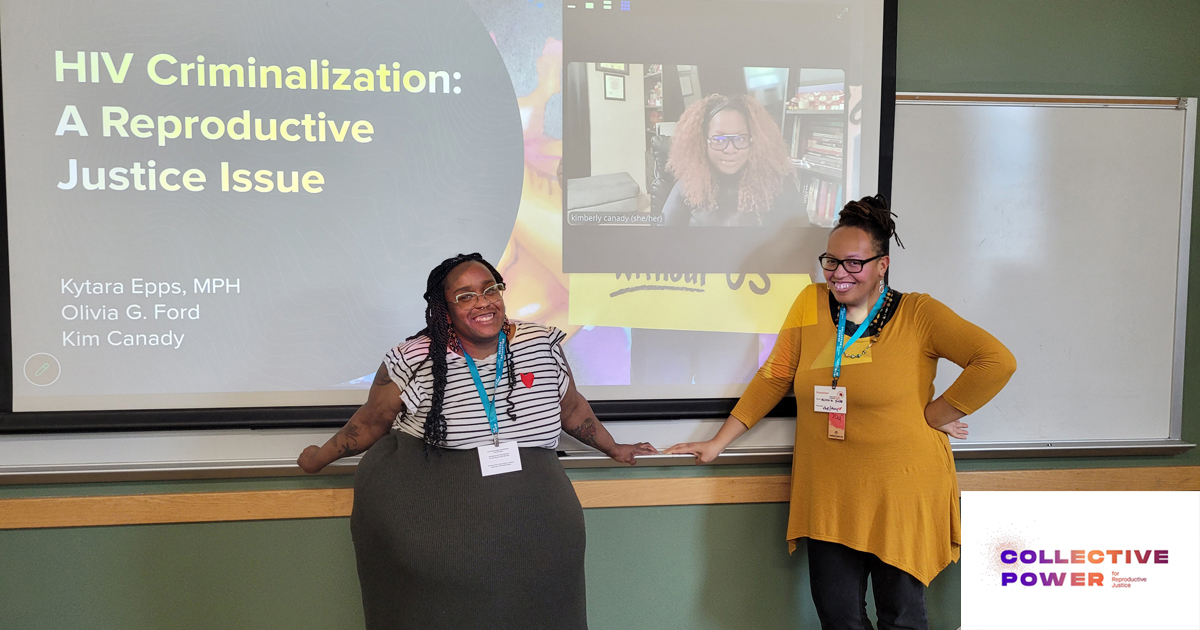
I co-presented the session "HIV Criminalization: A Reproductive Justice Issue," alongside The Well Project community advisory board (CAB) member and Conversations with Kim founder Kimberly Canady (virtually) and Kytara Epps of our partner organization The Center for HIV Law and Policy. Kytara shared the basics of HIV criminalization – which, despite more than a decade of vigorous, inspiring, and growing advocacy, are still often not well known even in health policy-focused spaces. Audience members got to come away knowing more about CHLP's phenomenal, recently revamped and broadened set of HIV criminalization US map overlays, as well as their crucial Sourcebook.
Next up, I covered "Criminalization & Parenting" through an HIV lens. I introduced The Well Project and our SHE/HER/THEY program, and framed the landscape with some data documenting the ways that parents living with HIV are routinely stigmatized, surveilled, shamed, and simply not appropriately celebrated in their role as expectant or new parents. I also covered some data from Canada indicating the connection between experience with HIV and with the family policing system, which is central to our work around breast/chestfeeding and HIV due to devastating reports of parents being threatened with or actually reported to the family policing system by providers for expressing a desire to feed their baby from their body.
Advocacy by women living with HIV, particularly Ciarra "Ci Ci" Brown, The Well Project's brilliant director of programs, is what got a strong caveat against calling CPS over infant feeding concerns put into the sweeping 2023 update to the perinatal HIV guidelines – a point the American Academy of Pediatrics repeated in its guidelines change the following year. The 2025 annual Perinatal HIV Roundtable, which The Well Project co-presented, covered the intersection of HIV and family policing systems more thoroughly if you want to check out that conversation on our site.
In closing, our audience was treated to Kim speaking with humor and passion about barriers to intimacy and pleasure created by the heightened surveillance unjustly put on people living with an HIV diagnosis. She closed by reframing pleasure as resistance, lifting up the healing, liberatory, and deeply political power of bodily autonomy and joy.
Our workshop was part of the first breakout block of the first full day of the conference, so afterward I was free to network, attend sessions, and watch my kid romp around campus, building community of her own with other advocate cubs. (Did I mention I brought my almost-8-year-old with me to Massachusetts? More on that below!) I attended an illuminating session titled "Addressing the Echo of Eugenics: Ableism in Reproductive Justice and What Is Possible Instead."
Presented primarily by Ericka Ayodele Dixon and Sebastian Margaret of Transgender Law Center (TLC), the session provided a primer on ableism and disability justice – which you can learn much more about on TLC's Disability Project website. Speakers engaged the audience in discussion about unexamined ableism, including some familiar tropes and even strategies employed in reproductive health and rights organizing spaces (such as the fear of having babies with disabilities being a key aspect of abortion rights framing). This line of conversation brought to my mind an example from the HIV community: the ongoing tension between celebrating and advancing the fact that Undetectable Equals Untransmittable (U=U) and the crucial importance of not sliding into stigmatizing and shaming those whose viral loads may, for whatever reason, remain detectable.
The session delivered a powerful reminder of how much there is to learn, and unlearn, though the lens of disability justice movements – including unpacking and being critical of the ways that our very sense of what it means to be "well," or to "contribute to society," has been shaped by oppressive systems. In an incisive 2024 piece, CHLP's Kytara Epps took the occasion of an HIV decriminalization win made possible by the Americans with Disabilities Act (ADA) to reflect on the intersections of HIV and disability justice, and to call for greater solidarity across multiple movements as we, to paraphrase the words of a participant in the disability justice session, build for a future of abundant support and celebration for all.
Another key nugget from the workshop that will continue to ring in my head is that access is not an organizing strategy. Making it possible for people to be in a room that might otherwise not have been able to – for instance, having a ramp up to the door or sign language interpretation – is not doing the work of making that room welcoming to a range of lived experiences. At best, access is a decent starting point. Part of how the Collective Power conference made itself accessible to a broader swath of their community is by offering child care during conference hours. I saw that on their website and was able to begin even thinking about making the four-hour trip, presenting in person, and doing all the excellent learning and networking I was able to do, as I wasn't willing or able to leave home on my own for three full days at the tail end of my kid's spring break.
We talk a lot in the HIV community about the wraparound services and supports that make it possible for people to stay connected to care, engage with community, and seek their own wellness. Likewise, when events are planned, organizers often express the desire for a diverse body of attendees and presenters. Putting supports like on-site child care (or subsidizing child care at home while the parent is at the conference), travel stipends, and food support into the funding and logistics structure of an event indicates that organizers want people with children and/or limited resources to be in the room. We in HIV have much to learn from our cousins in the reproductive justice movement – which was founded on centering the needs of women most likely to be ignored in mainstream feminist spaces.
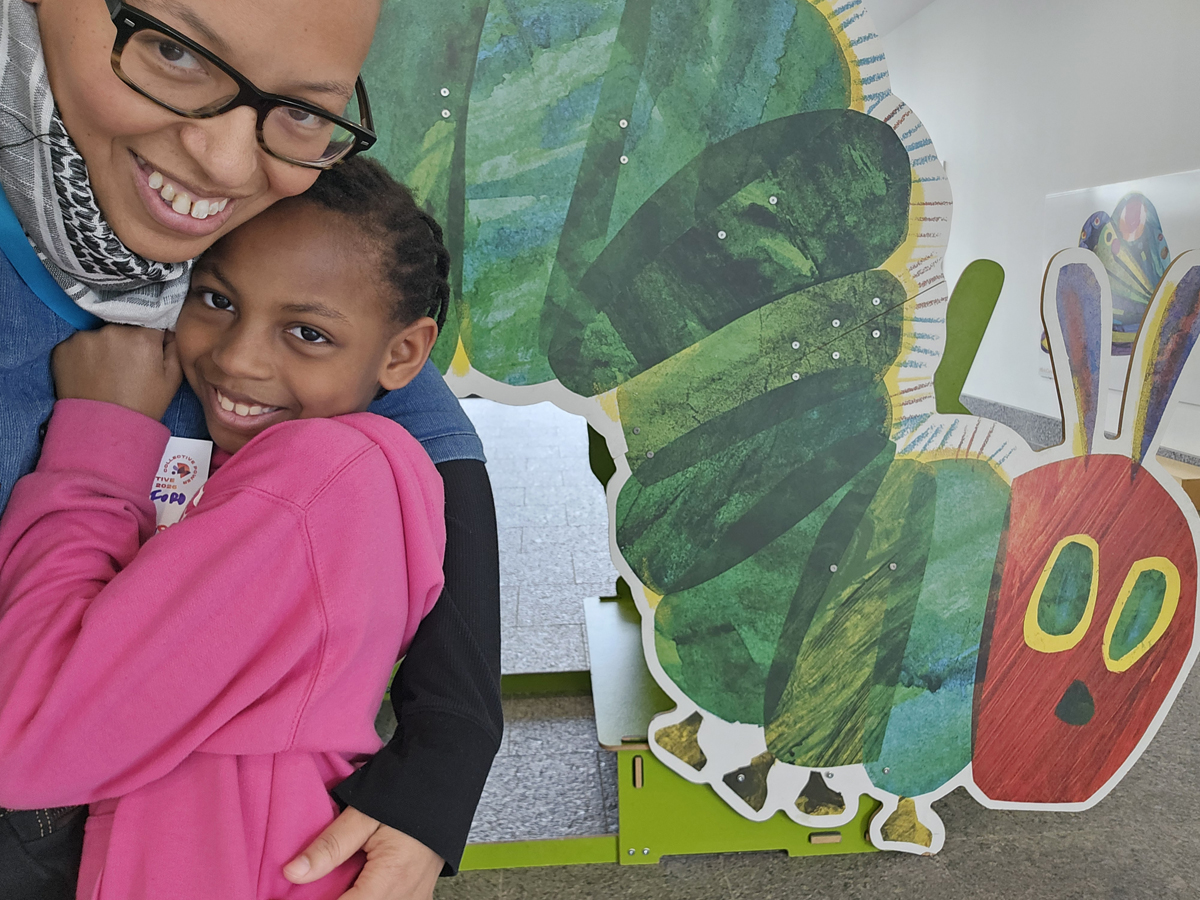
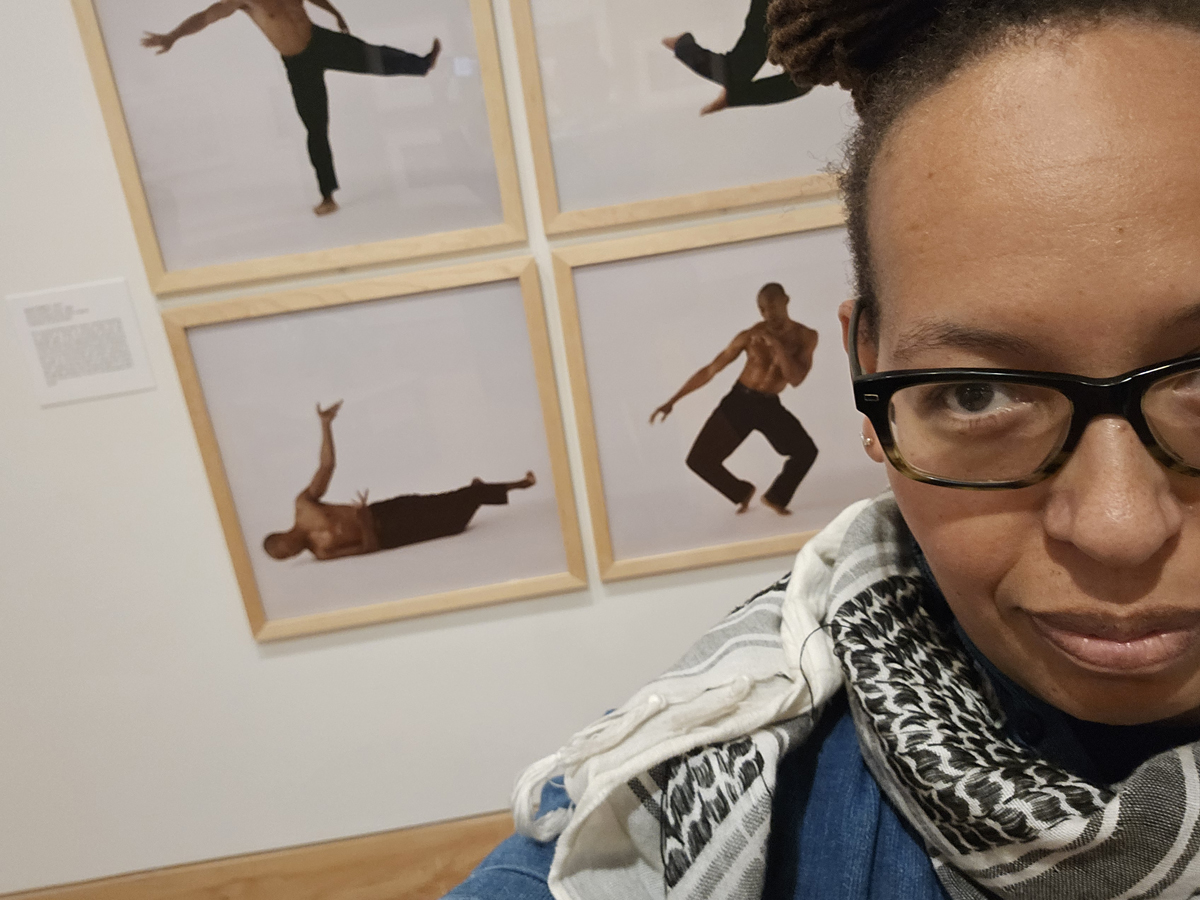
So I had my kid with me, she had a blast, and we even satisfied a longtime dream of going to the Eric Carle Museum of Picture Book Art (named for the illustrator who created the titular "very hungry caterpillar" with whom we are pictured above) – which ended up being barely a 10-minute walk from Hampshire's campus.
Shockingly, Hampshire College announced its permanent closing the week following Collective Power. The organization put out a statement mourning the loss of its longtime organizational partner and incubator, but assured its community that this tragic occurrence would not affect Collective Power's operations, as it has been its own 501c3 for more than six years. The venue for Collective Power's annual gathering may change, but the energy and community that have grown around it for four and a half decades will surely remain.