

I am practicing sitting with things a bit before tackling them. Projects, tasks, even questions I may be asked. I think it's important in the space and age I am in life. Giving things time to either fall into place or to come to a workable order in my head. Less stress, less rush.
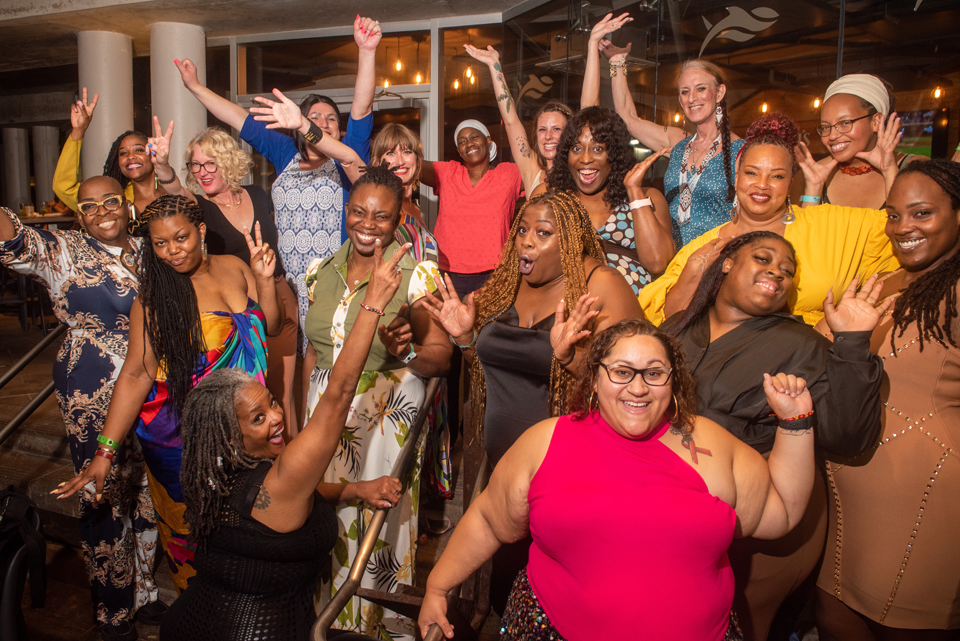
I was speaking to a group of women about HIV and prevention, and they were asking about my advocacy work. Questions like: Is it scary? (Sometimes.) Do my feelings get hurt? (Yup!) Do I worry about disclosure? (Rarely, these days.) How do I think HIV has changed my life? (It has, both infinitely and incrementally.) I answer questions like these all the time. My answers were true, but somewhat habitual. Then one of the women asked how I would define my HIV journey or legacy. I spent some time thinking about it because I didn't want to be flippant or give the same answer that I've heard before. I struggled with the answer, to be honest. Not because I didn't want to answer, or couldn't, but because I don't want to define it. Not in simple terms anyways. Defining something has a sort of finality to it, and I believe that definitions can be oversimplified if you only consider the words and not the emotion and intent beyond them. A definition does not allow room for circumstance. A definition does not allow room for growth. Life with HIV is not definitive; it is change. It is growth. Too often those of us living with HIV get stuck in a place where we allow ourselves to be defined by three or four letters.
A definition does not allow room for growth. Life with HIV is not definitive; it is change. It is growth.
People want to define living with this virus as being sick or dying. For a time that may have been true, but even when the epidemic was raging without treatment that worked and was considered a death sentence, it did not take into consideration the human spirit. The human capacity for discovery. The indefatigable will to not be defined by a social label, a diagnosis or by a disease process.
By definition, HIV is a virus that attacks the immune system and, left unchecked, it can lead to AIDS. But there is so much more beyond that. If you try to describe a life lived with HIV you can apply words like resilient, courageous and survivor, but words don't tell the full individual story. While many of us use the same words to describe our overall experiences with HIV, its impact has shaped and changed each of us in unique ways.
I think at the end of the day, I don't want to define my journey or legacy with HIV because it's still evolving. It's still becoming more as opposed to having reached an end point or pinnacle. It's also critically important we are not reduced to just the HIV/AIDS experiences in our lives. Defining us by one thing reduces our other life triumphs, lessons and contributions to footnotes with a qualifier. I was Sharon's daughter, Dwayne's sister and Shae's friend before HIV. I played sports, served in the military and had a child before I acquired HIV. I became a nurse, someone's grandmother and an advocate after HIV. I did some traveling, wrote a play and started painting after the virus entered my life. Do the "after" things hold more weight because of my diagnosis? I argue not, but it depends on perspective, I guess. Personally, I don't want my obituary or tombstone to say, "all while living with HIV" or "she did blah, blah, blah even though she had HIV." I am who I am because I choose not to let an acronym define me. I choose not to let HIV be the only definitive in my journey or legacy.
Be well. You matter.
This blog was originally posted on Positively Aware's "Being Bridgette"



<3
<3